Springs · Caledon East
Garage Door Cable Replacement in Caledon East
Someone left the snow shovel leaning in the opening and the door came down on it. Now a loop of steel cable hangs loose beside the track and the door refuses to close the last few inches.
Garage Door Cable Replacement
In plain words
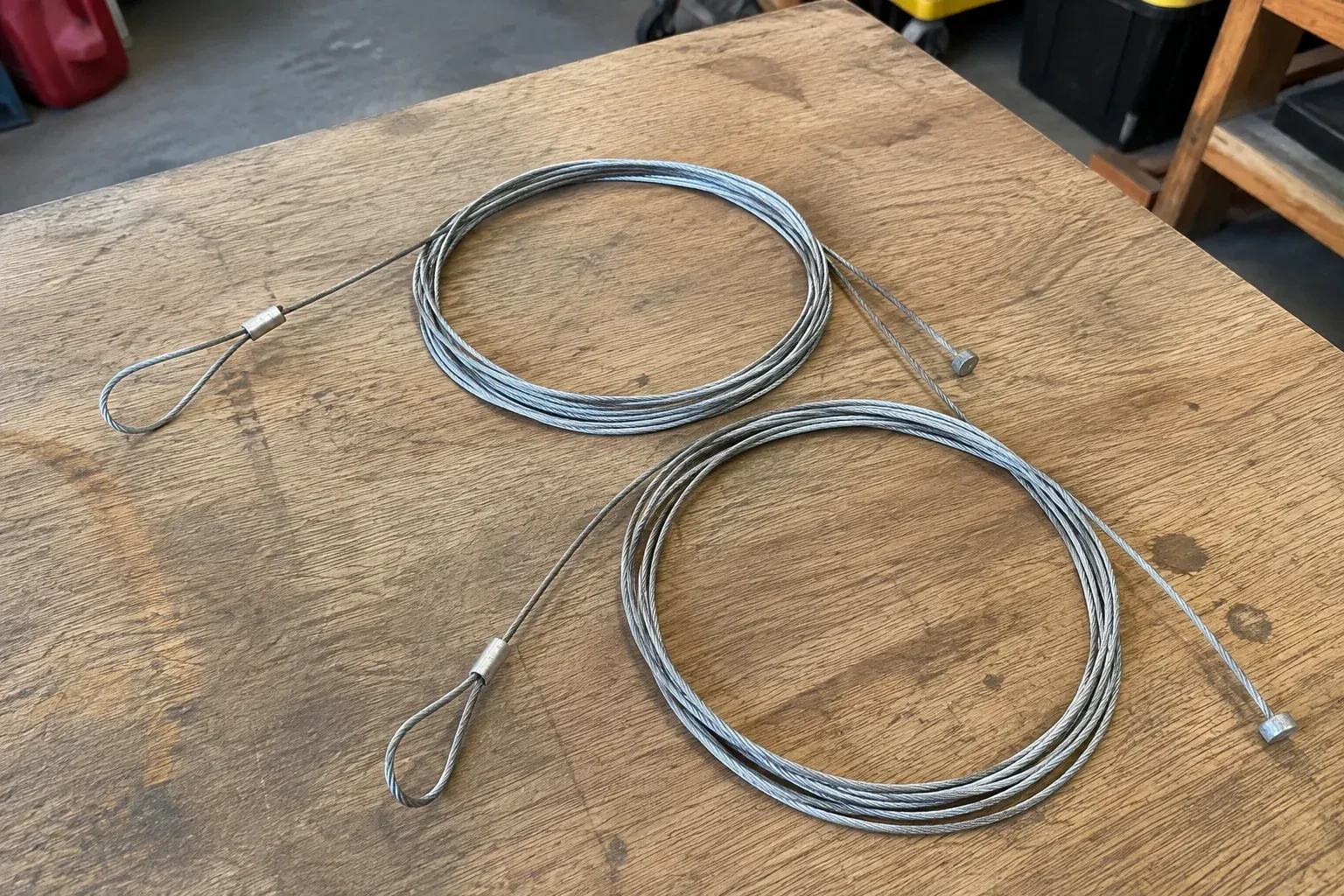
Garage door cables carry the weight of the door as tension held by the springs, which is why the work follows a careful, well-rehearsed sequence rather than simply hooking a cable back on. On a torsion system the technician clamps the door, disconnects the opener and unloads the springs with winding bars before any cable, drum or bracket is touched; on an extension system the door is instead raised fully and clamped so its pulley-mounted springs relax. Once the system is unloaded, replacing the cables is straightforward: the correct length is set, and the counterbalance is tensioned and locked off by the method that system calls for.
How the visit goesStanding inside with the door closed, you notice the cable on the right side near the floor has gone fuzzy. A handful of broken wires stick out like a bottle brush and the steel underneath is brown.
Caledon East
How the visit goes
The drums and their set screws
On a torsion door the cable drum is where most trouble starts or shows. The technician checks that each drum is tight on the shaft and that its set screws have not loosened and let it creep, which shortens the effective cable on that side. The groove is inspected for wear ridges, cracks and burrs that would chew through a new cable, and the slot that holds the cable stop is checked for damage. Where the old cable jumped its groove, the drum is examined for the mark it left and for whether the drum or an obstruction under the door was the cause. A worn drum is replaced with its mate.
Balance, travel and the opener
With the springs wound and the clamps off, the technician lifts the door by hand. It should rise with light effort, hold still at roughly waist height, and settle to the floor without slamming; that is the balance test, and the spring turns are adjusted until it passes. The door is run through several full cycles by hand while the cables are watched on the drums. Then the opener is reconnected, its travel limits and force settings are checked against the newly balanced door, and the reversing test with a block under the door and the photo-eye test are carried out. You see each of these done.
Keeping salt and slush off the bottom hardware
The new cables will last longest if the bottom brackets stay reasonably dry. Through winter, push slush away from the door's inside edge rather than letting it pool against the bottom section, and wipe the road salt off the brackets and the lowest stretch of cable when a mild day comes. A light spray of silicone lubricant on the cable loops and bracket pins in late autumn sheds meltwater. Park so the car does not drip directly onto the corners of the door. None of this is a chore, and it addresses the one spot where cables in this climate almost always fail first.
Garage Door Cable Replacement
In the van
- Clevis pins and cotter pins
- Track clamps or locking pliers
- Silicone garage-door lubricant
- Bottom rollers and hinges
- Extension-spring pulleys and sheave forks
What affects the quote
Same fees day, night or weekend
1One cable or the pair
Cables are normally renewed together, and the quote reflects two cables and the work of setting both sides level. Where one side was recently replaced, that is discussed on site.
2Worn rollers and hinges found on the way
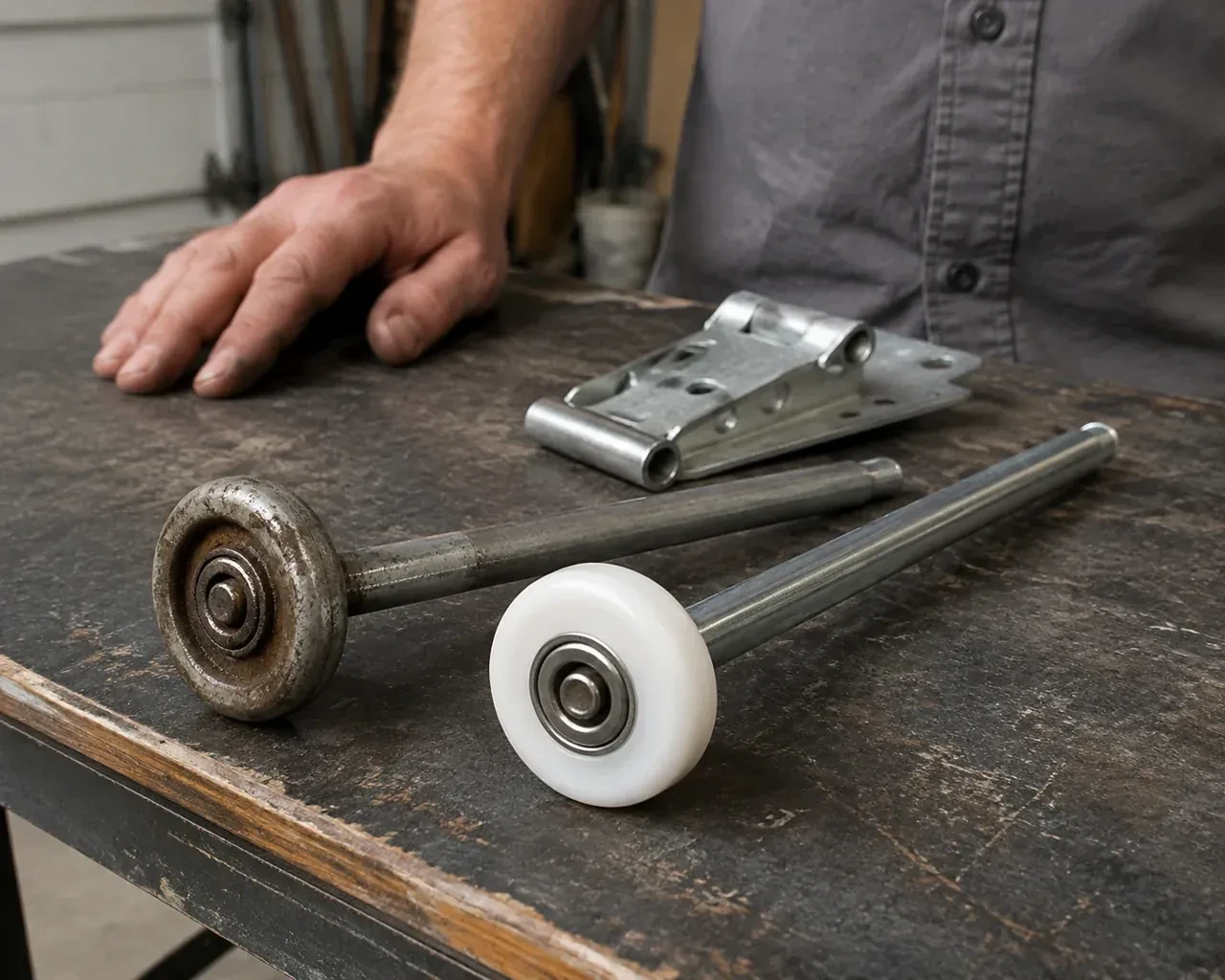
Cracked roller wheels or split hinges seen during the inspection are pointed out and offered as optional items, since replacing them while the door is unloaded is efficient.
3Whether a matching part has to be special-ordered
Most drums, brackets and cable sizes are common stock, but an older or uncommon door sometimes needs a part matched to its exact dimensions. When that happens the technician identifies it on the first visit and arranges the part before the return trip.
Garage Door Cable Replacement: questions
What is the difference between a lift cable and a safety cable?
A lift cable does the work: it connects the door's bottom corner to the spring system and carries the door's weight. A safety or containment cable does no lifting at all. It runs through the middle of an extension spring and is anchored at both ends so that if the spring breaks, the pieces stay put. Torsion springs sit on a shaft and do not need one.
How do I tell a cable problem from a spring problem?
Look above the door with it closed. A torsion spring that has broken shows a clear gap in the coil, and both cables usually go slack together because nothing is turning the shaft. A cable problem tends to show on one side only: a frayed length, a coil of loose cable, or one corner sitting higher. Either way the technician inspects both, since a weak spring is a common reason a cable fails.
Can I lift the door by hand while a cable is off?
Leave it. With one cable slack the door is being carried on one side only, so it is unbalanced and may bind or drop unevenly when moved. The technician arrives with clamps and a method for taking the door's weight before anything is moved, and that is the moment to lift it. Until then a stationary door is exactly what you want.
Springs & Hardware
Garage Door Cable Replacement near you
Garage door work for Caledon East divides neatly into what we fix, what we replace and what we install. We fix tracks, hinges, openers and panels; we replace springs, cables, rollers, seals and sensors; and we install new doors, new openers and access equipment such as keypads and smart controllers.