Openers · Caledon East
Emergency Release Repair in Caledon East
Someone pulled the cord last spring to get a car out during an outage, and the door has never properly rejoined the opener. Press the button and the trolley glides along the rail by itself while the door stays exactly where it is.
Emergency Release Repair
In plain words
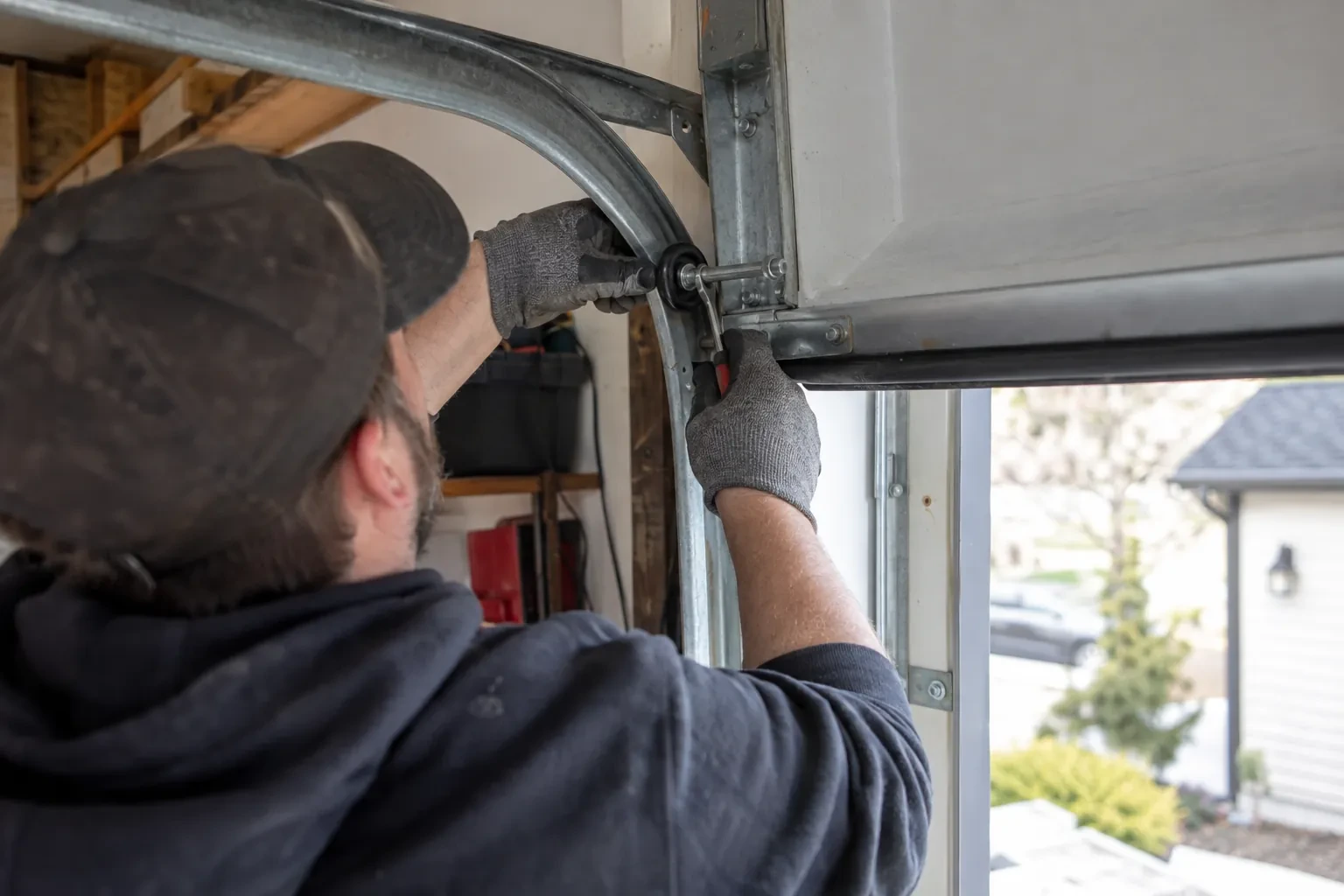
There are two releases on many garages, and this service covers both. Inside, the red handle drops from the trolley and anyone standing in the garage can pull it. Outside, some doors carry a small keyed cylinder, near the top on a sectional door or at mid-height on others; turning the key pulls a cable that throws the same lever from the driveway, which matters when the garage has no other door and the opener is quiet. Repair inside usually means a new cord, handle, lever or trolley. Repair outside means a new cylinder, cable or keys, routed clear of the section joints so the key turn reaches the lever.
How the visit goesIt is the coldest morning of the year. A week of slush and road salt has crusted over the outside release lock, the key will not seat, and the opener inside is silent after the overnight outage. The car sits behind a door that will not move.
Caledon East
How the visit goes
How the door behaves on its own
The release is then pulled with the door closed and the door is lifted by hand, using the door's own handle or a gripping point clear of the section joints. This is the balance test, and it decides the order of the work. A door that rises with modest effort, holds at about a metre and stays fully open is ready for release work. A door that feels heavy, sinks back or springs upward is telling the technician that the counterbalance needs attention first, and the release is left disconnected until that is done. Manufacturers and the industry checklist both put this test ahead of any further use of the release.
Fitting or repairing the outside key release
For a garage with no other way in, an outside release is fitted or repaired. A hole is cut for the cylinder where the kit and door call for it, the top section on a sectional door or mid-height on others, the lock is mounted with its plate, and a cable is run from the back of the cylinder to the release lever on the trolley, clear of the section joints and the top bracket as the door bends into the track. The cable is set with slack enough that turning the key and pulling the cylinder throws the lever fully. A seized cylinder is replaced, a stretched cable re-set or renewed, and two keys are handed over.
Battery backup and outage-prone streets
If your street loses power a few times each winter, the technician may raise battery backup. Modern openers can carry a battery that opens and closes the door on stored power, which spares you the release altogether in most outages. The battery is a wearing part, generally replaced every few years, and the head unit signals when it is tired. The release remains the fallback when the battery is flat or the opener itself has failed, which is why both are kept in working order. You leave knowing which of the two your household relies on and how each one is checked.
Emergency Release Repair
In the van
- Track clamps to hold the door
- Outside key release kit (lock, cable, keys)
- Hole saw for the top section
- Trolley and carriage assembly
- Dry lock lubricant and de-icer
What affects the quote
Same fees day, night or weekend
1Freeing versus replacing the trolley
A trolley jammed on the stop bolt is freed, adjusted and reused when its latch is sound. One with worn teeth or a cracked body is replaced, which changes both parts and labour.
2Distance to your door
Every visit includes the drive. A property on the edge of the service area or down a long rural road takes more of the technician's day than one a few streets away, and the quote allows for it.
3Travel and tension reset
Where the trolley was freed or swapped, the chain or belt is re-tensioned and the travel limits are reset, then the reversal tests repeated. That setup time is part of the job and shown as such.
Emergency Release Repair: questions
How high should the release handle hang?
No more than about 1.8 metres above the floor, so an adult standing on the slab can reach it, and high enough to clear the roof of the car parked beneath it. It should also be plainly visible and red. If a new door or a rail change left the cord short, or a previous owner tied it up around the rail, the technician cuts a fresh rope to the right length and moves any obstruction out of the way.
Why should the door be closed before I pull the handle?
Because once the trolley lets go, the door is held only by its springs. A well-balanced door will stay put wherever it is, but a door whose springs are tired can drop, and one that is over-tensioned can rise on its own. Even with the door already on the floor it can still move unexpectedly, so keep the opening clear whenever the release is pulled. The industry checklist and opener makers give the same instruction: disconnect with the door fully closed.
Why does the trolley run but never reconnect to the door?
Three usual causes. On many rails, pulling the cord back toward the opener deliberately holds the lever out for a spell of manual use, and someone forgot to return it. Or the trolley latch teeth or the release arm are worn or bent, so the two parts pass without catching. Or the carriage sits at the wrong point for the powered trolley to meet, since reconnecting is meant to happen during an opener cycle, not by pushing the door shut by hand. Each is a short fix once identified.
Openers & Access
Emergency Release Repair near you
Garage door work for Caledon East divides neatly into what we fix, what we replace and what we install. We fix tracks, hinges, openers and panels; we replace springs, cables, rollers, seals and sensors; and we install new doors, new openers and access equipment such as keypads and smart controllers.