Openers · Bolton
Chain-Drive Opener Repair in Bolton
Halfway up, the door lurches. Something in the drive skips a beat, the chain jumps, and the door finishes its travel with a jolt.
Chain-Drive Opener Repair
In plain words
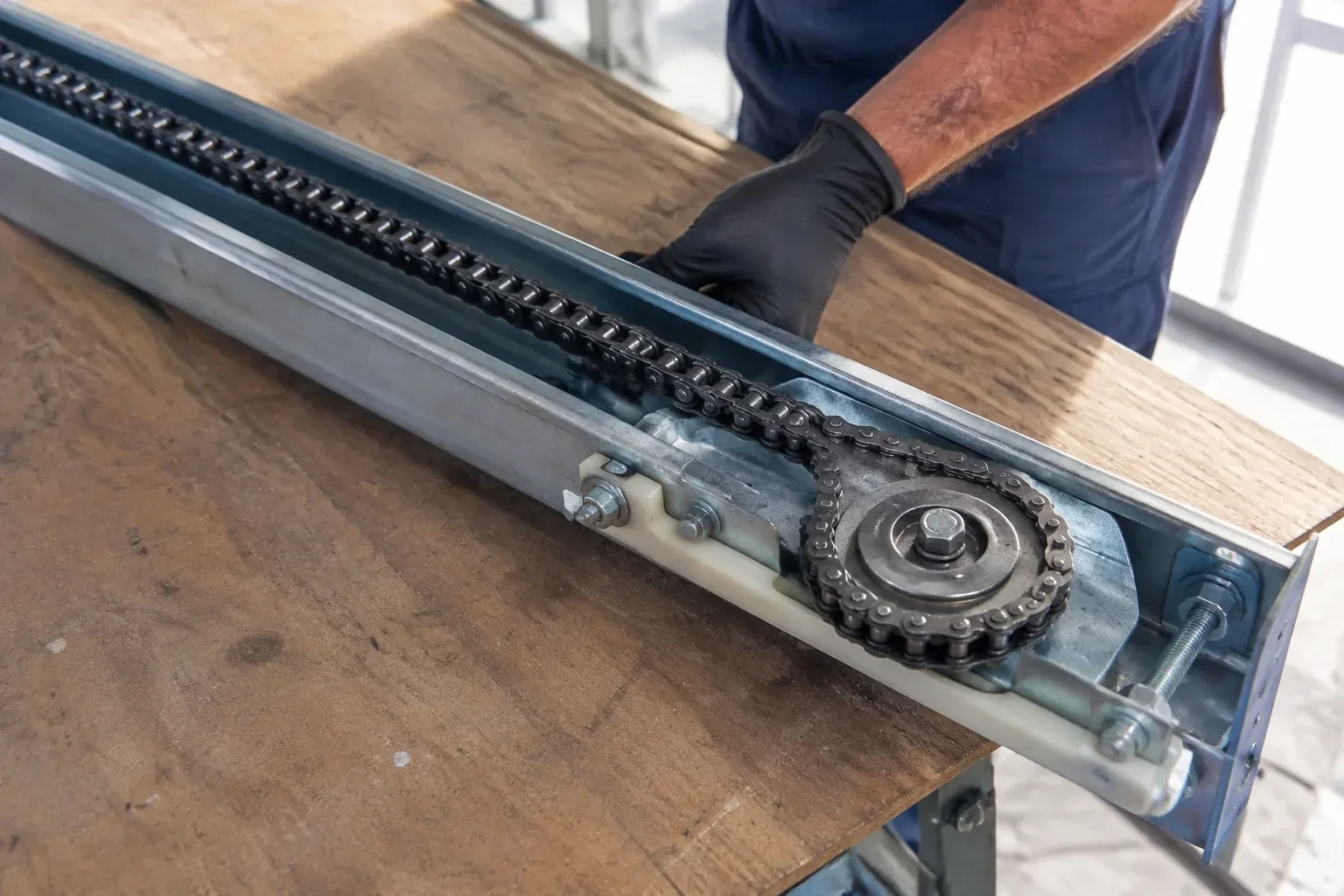
Here is how a visit runs. The technician watches the door run once, then unplugs the operator, pulls the red release and lifts the door by hand to confirm the springs are doing their job. The head cover comes off and the gear, sprocket shaft and capacitor are looked at. The chain, trolley, rail and hangers are inspected along their full length. Worn parts are swapped for the model's own, the chain is phased and tensioned, the limits and force are set, and the door is tested against a block on the floor and an interrupted sensor beam. You are shown the release handle and the monthly checks.
How the visit goesThe chain in the detached garage went orange with rust over the winter, the links are stiff, and the opener strains and groans to pull the door up. By afternoon, once the garage warms, it behaves almost normally.
Bolton
How the visit goes
Lifting the door before touching the drive
Every chain-drive repair starts with the operator unplugged and the red release pulled so the door is free of the trolley. The technician then lifts the door by hand. It should rise with modest effort, stay where it is left about a metre off the floor and settle gently at the top. A door that is heavy in the hands or drifts down is telling the technician that the springs, not the chain, are behind the strain, and that a stripped gear or a jumping chain was the symptom rather than the cause. Sorting the door out first is what gives a repaired drive a long life instead of a second failure.
Resetting travel and force
With the drive mechanically sound, the operator is taught the door again. On older heads, the up and down limit screws are turned with a flat screwdriver, each full turn moving the stop about 5 cm, until the door meets the floor with the seal lightly compressed and opens to full height without the trolley reaching the bolt. Force is set to the lightest level that moves the door reliably through a full cycle in the garage's normal temperature. Newer heads run a learn cycle from buttons on the back and measure both for themselves. The operator is then cycled several times to confirm the settings hold.
Two tests once a month
The protection built into the operator only counts if it still works, and two short checks each month keep you sure of it. Lay a scrap of 2x4 flat on the floor under the middle of the door and close it from the wall button; the door should climb back to open the moment it touches the wood. Then, with the door closing again, pass a broom handle through the beam of the low sensors; the door should reverse just the same. If either test is failed, stop using the operator and book an adjustment. It is a setting, and a small one, but it is the one that matters most.
Chain-Drive Opener Repair
In the van
- Rail hangers and header bracket
- Idler sprocket or pulley
- Sprocket and shaft assembly
- Cold-rated garage door lubricant
- Roller chain with master link
What affects the quote
Same fees day, night or weekend
1A detached or unheated garage
Cold-rated lubricant, a chain replaced rather than freed, and force set for low temperatures are choices made for a garage that sees winter, and they show in the parts and the time.
2Two operators in one visit
A double garage with two chain drives, or a house and a detached workshop, share the travel and setup and are quoted as one visit with two repairs.
3Rail hardware and hangers
Loose hangers, a header bracket that has pulled from the framing, or splice plates that need renewing add fasteners, angle iron and time on the ladder to a job that might otherwise be an adjustment.
Chain-Drive Opener Repair: questions
Should I oil the chain?
Follow the opener's manual, and lean toward less. Many makers ask for the chain to be left dry or given only a very light treatment, because a heavily oiled chain collects grit that grinds the sprocket and drips onto the car. The grease that matters is white lithium on the rail where the trolley runs, renewed every two or three years, and on the gears inside the head, which the technician packs during a repair. Penetrating sprays are kept away from the whole drive.
What should I check before calling?
With the door closed, pull the red handle and try lifting the door by hand; note whether it is heavy or stays up on its own. Look at the chain for slack, rust or a broken link, and at the head for pale shavings. Note whether the motor runs at all, whether the door stops short or reverses, and where the trolley sits on the rail. The model on the head's label and a photo of the rail help too.
What is the trolley, and why would it get stuck?
The trolley is the carriage that rides along the rail, pulled by the chain, with the door arm hooked to it. It gets stuck when the travel limits creep and it is driven onto the stop bolt at the head end or the stop tab at the door end, where the motor hums but nothing moves. The technician slackens the chain, runs the trolley off the stop under power, and pulls the limit back so it stops short in future.
Openers & Access
- Belt-Drive Opener RepairSomeone tightened the belt last month to stop the sag.
- Garage Door Opener ReplacementYou swapped the old wooden door for a heavier insulated steel one, and the twenty-year-old opener…
- Photo-Eye Sensor Alignment or ReplacementSince shelving went up along the garage wall, the door will not close and both sensor lights are…
Chain-Drive Opener Repair near you
If your door in Bolton is doing something new, there is a service here for it. Grinding usually points to rollers or hinges. A door that will not lift points to a spring or cable. A door that reverses on its own points to sensors or force settings. We diagnose first, then repair.