Repairs · Caledon
Garage Door Manual Lock Repair
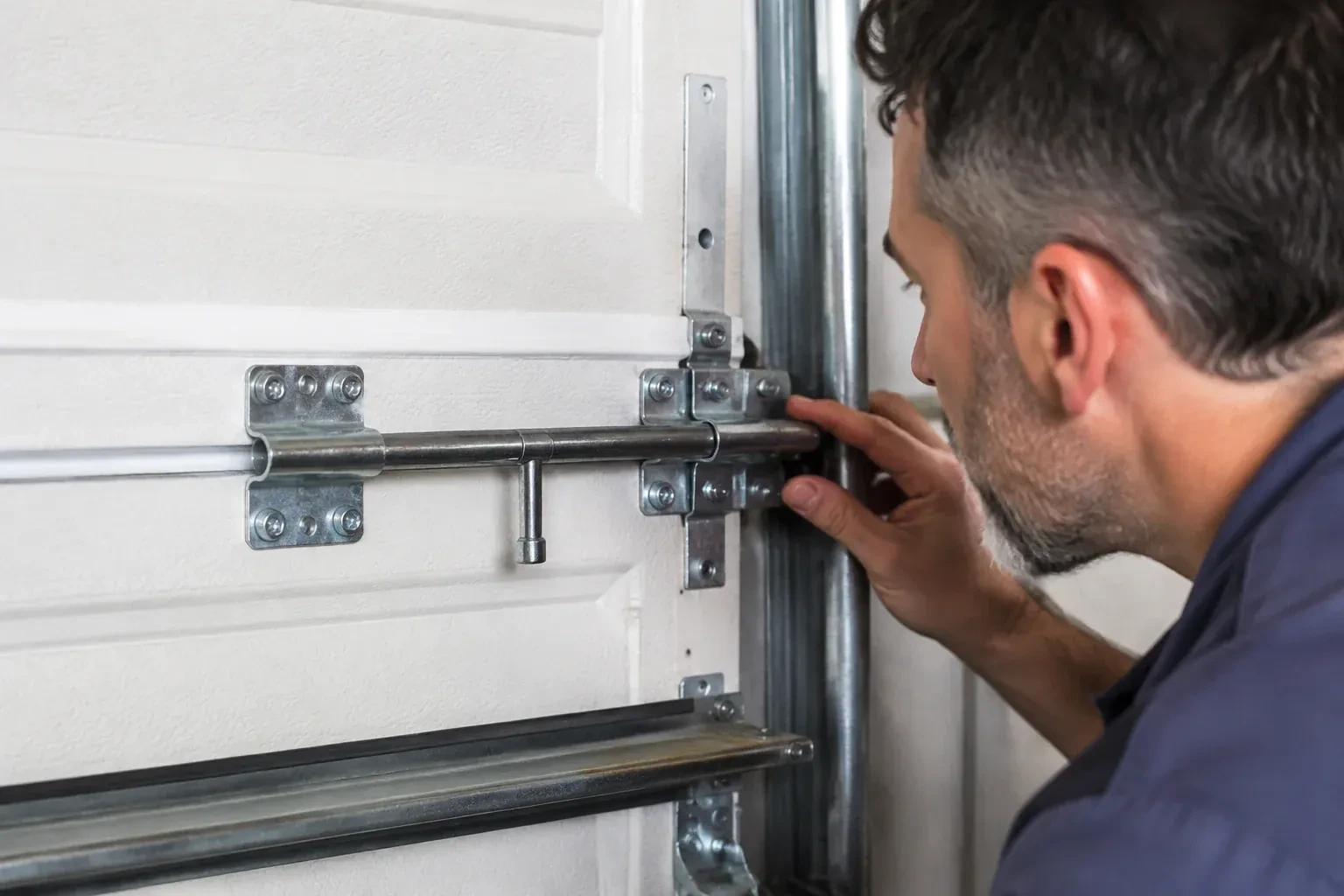
You pushed the slide bolt across like always, but tonight it stops short of the slot in the track and springs back. The door is down, the bottom seal is on the concrete, yet the bar and its hole are a finger's width apart.
Garage Door Manual Lock Repair
In plain words
A sectional garage door is usually locked in one of two ways. An inside slide bolt on the door's edge shoots sideways into a slot cut in the vertical track. An outside keyed T-handle or L-handle turns a centre mechanism that throws a bar into each track, or on some models pulls a cable to release spring latches instead. Manual lock repair puts either arrangement back into service: the technician confirms the door closes fully and sits square, then frees, adjusts or replaces the bars, guides, lock body, handle or cylinder, and tests that the lock holds firmly and, just as important, clears the track completely when it is released.
How the visit goesThe outside handle wobbles in your hand and the inside knob spins round and round with nothing attached. The screws that held the lock through the door skin have pulled loose, leaving oval holes, and the whole thing hangs on by little more than paint.
Caledon
How the visit goes
The cylinder and its key
A keyed handle gets the same attention a house lock would. The technician tries the key, feels for grit, ice or wear, and checks whether the cylinder is firm in the handle or has worked loose. A key that turns freely without unlocking anything means the tailpiece or cam at the back of the cylinder has broken or slipped. A key that will not enter or turn in cold weather usually means meltwater has frozen in the keyway. A key that needs a wiggle means worn pins or a worn key. Whether you hold a key at all is noted too, since a lost key shifts the plan from repair to rekeying or replacement.
Lining the bar up with its slot
When door position is the cause, the fix goes to the door, not the lock. Track brackets that have loosened are tightened so the vertical track sits plumb and at the correct distance from the door. If the opener's down limit stops the door a little high, the limit is reset so the door rests on the floor. Bar guides are then repositioned or shimmed so each bar meets the centre of its slot with the door shut, and the slot is dressed with a file if a burr has formed. Only where a slot is genuinely in the wrong place is a new one punched, with the old one left clean.
Getting the cylinder and bars through winter
The outside cylinder sits on a cold steel face where meltwater runs, so it gets a dry graphite or PTFE lubricant rather than oil, which would trap moisture and grit. A puff at the start of the cold season and another after the first thaw keeps the pins moving. A small tube of lock de-icer in the car is the answer to a keyway that has frozen; hot water is never poured on it. The bars and their guides, which live where salt spray collects, take a light silicone film in late autumn. Keep the threshold clear of packed snow so the door closes to its full depth and the bolt still finds its slot.
Garage Door Manual Lock Repair
In the van
- Inside slide bolt or snap latch
- Carriage bolts and backing plates
- Inside turn handle and spindle
- Spring-steel lock bars
- Dry graphite or PTFE lubricant
What affects the quote
Same fees day, night or weekend
1Whether an opener shares the door
A powered door adds the coordination step: removing or disabling the bars, demonstrating the console lock-out, or installing an automatic deadbolt if you choose one. Each is priced as chosen.
2Adding a lock where none existed
Fitting a new slide bolt or a keyed handle to a door that never had one includes punching track slots, a section cutout for a handle and running bars to both tracks.
3Access along the door edges
Shelving, bikes or storage against the vertical tracks and door edges slow the work at the guides and slots. Clearing a metre either side beforehand shortens the visit.
Garage Door Manual Lock Repair: questions
Why does my slide lock stop short of the hole in the track?
Because the door is not resting where it rested when the lock was fitted. A heaved or settled slab, a loosened track bracket, a flattened bottom seal, packed snow at the threshold or an opener limit set a little high all move the door a few millimetres, and a few millimetres is all it takes. The technician corrects the door's closed position or resets the guide so the bar finds its slot again.
Should the manual lock be removed when an opener is installed?
Opener makers ask for it to be disabled or removed, and the door industry's guidance agrees. Disabled can mean the bars are fixed back or taken out while the handle stays for appearance, or a snap latch is held open on its catch. Keeping a lock live for outages calls for a manufacturer-approved interlock, not a label alone, since a reminder and routine are not treated as a substitute for removing or disabling the bars.
Will new holes have to be cut in the track?
Rarely. The slots are already there on most tracks, and a bar that misses one is usually a sign the door or a guide has moved. Restoring the door's closed position and resetting the guide brings the bar back to the existing slot. A new slot is punched only when a lock is added to a door that never had one, or an old slot is badly damaged.
Repair & Maintenance
- Garage Door Tune-UpOn windy nights the door rattles in its frame, there is a line of daylight along one side, and the…
- Off-Track Garage Door ResetThe morning after a thaw the opener groaned, the door stayed stuck to the icy floor for a second…
- Garage Door Panel ReplacementAfter an overnight freeze the door stuck to the slab, the opener strained, and something gave.
Garage Door Manual Lock Repair near you
A garage door in Caledon rarely fails all at once. It gets louder, slower or less even first. Our services are arranged so you can act at any point: a tune-up while it is still working, a repair when something lets go, or a replacement when the door has earned its retirement.